Quantum computing is one of the most advanced and exciting technologies shaping the future. While it may sound complex, understanding the basics is easier than you think.
In this guide, we’ll break down quantum computing explained in simple terms so anyone can understand it.
What is Quantum Computing?
Quantum computing is a type of computing that uses principles of Quantum Mechanics to process information.
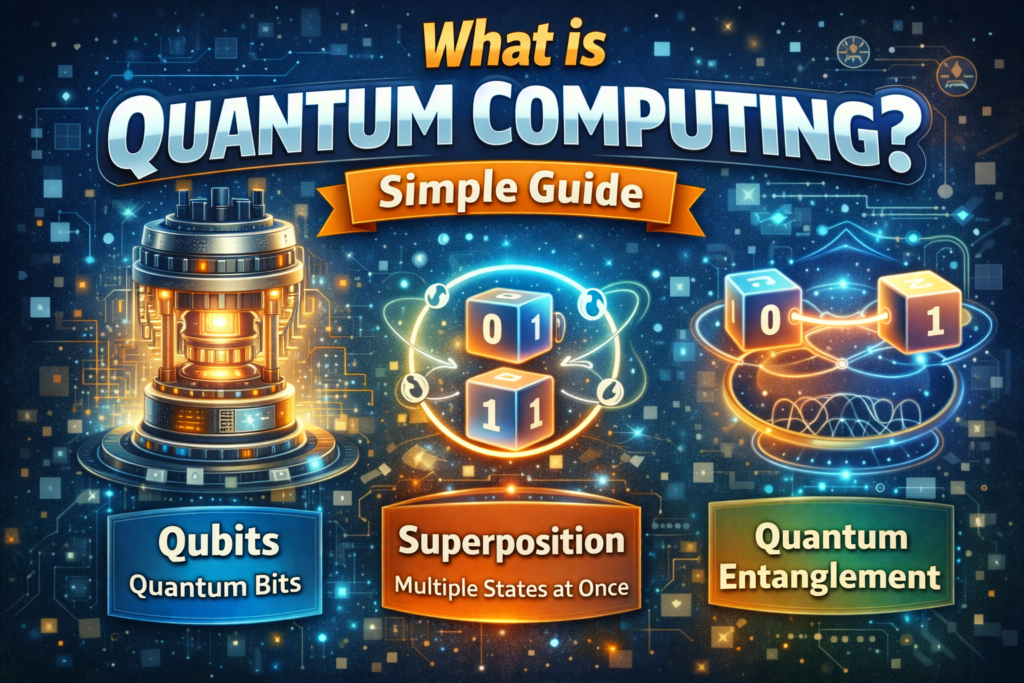
Unlike traditional computers that use bits (0 or 1), quantum computers use qubits, which can exist in multiple states at the same time.
How is it Different from Classical Computing?
Classical Computers
- Use bits (0 or 1)
- Process tasks sequentially
- Limited by hardware speed
Quantum Computers
- Use qubits (0, 1, or both simultaneously)
- Can process many possibilities at once
- Much faster for complex problems
Key Concepts of Quantum Computing
1. Superposition
Superposition allows qubits to be in multiple states at once, increasing computing power.
2. Entanglement
Qubits can be linked together, so the state of one affects another—even at a distance.
3. Quantum Interference
Helps in filtering correct answers from multiple possibilities.
Who is Working on Quantum Computing?
Major companies investing in this technology include:
- IBM
- Microsoft
These companies are building quantum systems for research and real-world applications.
Real-World Applications of Quantum Computing
Quantum computing has the potential to revolutionize multiple industries:
1. Healthcare
- Drug discovery
- Disease modeling
2. Finance
- Risk analysis
- Fraud detection
3. Cybersecurity
- Advanced encryption
- Data protection
4. Logistics
- Route optimization
- Supply chain management
Advantages of Quantum Computing
- Extremely fast processing
- Solves complex problems
- Improves optimization
- Enhances AI capabilities
Challenges of Quantum Computing
- Expensive technology
- Requires specialized environment
- Still in early stages
- Limited practical use today
Future of Quantum Computing
Quantum computing is still evolving, but its future is promising. As research progresses, it is expected to solve problems that are currently impossible for classical computers.
Industries like AI, healthcare, and finance will benefit the most from this advancement.
Final Thoughts
Quantum computing may seem complex, but at its core, it’s about using the laws of physics to process information in a smarter way.
As this technology grows, understanding its basics will give you an edge in future tech-driven careers.