
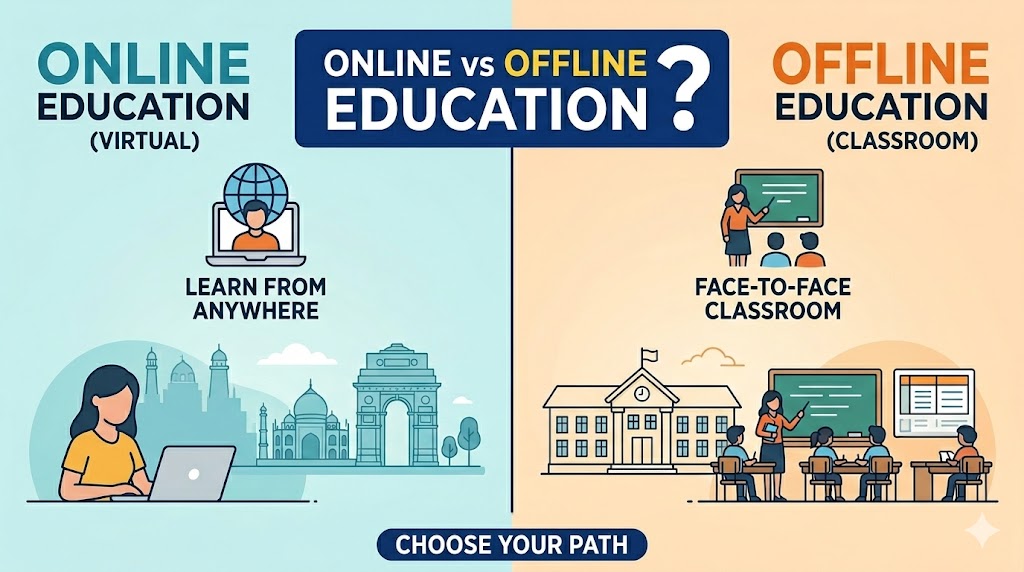
There is no one-size-fits-all answer to whether online vs offline education in India is better. Online education offers flexibility and affordability, while offline education provides better classroom interaction and structured learning. The right choice depends on a student’s goals, learning style, and career plans.
Introduction
The debate around online vs offline education in India has become stronger after COVID-19. With the rise of digital education platforms and UGC-approved online degrees, students now have more options than ever. But which mode truly offers better value, learning outcomes, and career growth? Let’s compare both formats in detail.
What Is Online Education in India?
Online education in India refers to learning through digital platforms, virtual classrooms, and recorded lectures. Students attend classes through video conferencing tools or access study materials through apps and websites. Many Indian universities now offer online degree programs, making higher education in India accessible to students across cities and rural areas.
Online learning is especially popular among working professionals and students preparing for competitive exams because it provides flexibility and self-paced study options.
What Is Offline (Traditional) Education?
Offline education, also known as traditional classroom learning, involves physical attendance at schools or colleges. Students interact face-to-face with teachers, participate in classroom discussions, and follow a fixed academic schedule.
The traditional education system in India has been trusted for decades because of its structured environment, peer interaction, and campus exposure.
Advantages of Online Education in India
One of the biggest benefits of online education in India is flexibility. Students can learn anytime and from anywhere. This is ideal for working professionals or those living far from major cities.
Online courses are also more affordable compared to regular college programs. There are savings on travel, accommodation, and campus-related expenses.
Additionally, digital education in India allows students to access recorded lectures, making revision easier. Many platforms also offer skill-based certifications in areas like data analytics, AI, and digital marketing, improving employability.
Benefits of Offline Classroom Education
Offline classroom education offers better student-teacher interaction. Immediate doubt-solving, classroom discussions, and peer collaboration help improve understanding.
Traditional education also provides practical exposure through labs, internships, and campus activities. For courses like medicine, engineering, or design, hands-on learning plays a crucial role.
Another advantage is discipline. A structured routine helps students stay consistent and focused on academics.
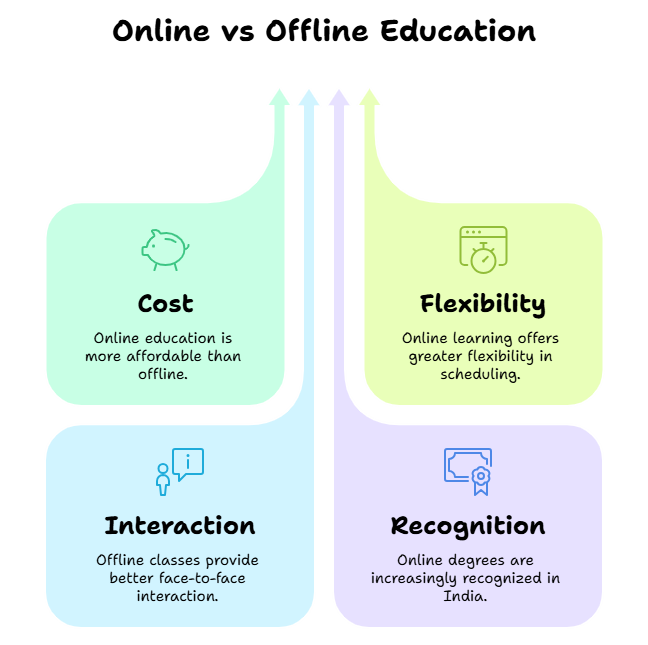
Online vs Offline Education: Key Comparison Factors
1. Cost
Online education is generally more affordable. Offline education involves tuition fees along with additional living expenses.
2. Flexibility
Online learning offers greater flexibility, while offline education follows a fixed schedule.
3. Interaction
Offline classes provide better face-to-face interaction, whereas online learning depends on virtual communication.
4. Recognition
Today, many UGC-approved online degrees are valid in India. However, employer preference may vary depending on the course and institution.
Is Online Education Effective in India?
Online education in India can be highly effective if students are self-disciplined and motivated. With proper time management and access to reliable internet, students can achieve similar outcomes as classroom learning.
However, some learners may struggle with distractions and lack of direct supervision.
FAQs
1. Is an online degree valid in India?
Yes, UGC-approved online degrees are valid for jobs and higher studies in India.
2. Which is more affordable: online or offline education?
Online education is usually more cost-effective due to lower overall expenses.
3. Do employers prefer online or offline degrees?
Employers focus more on skills and knowledge. The institution’s reputation also matters.
4. Can online education replace classroom learning?
It can replace it in some fields, but practical and hands-on courses still benefit from offline learning.
5. Is online learning suitable for competitive exam preparation?
Yes, many students prefer online courses for flexibility and recorded lectures.
Conclusion
When comparing online vs offline education in India, both have their strengths and limitations. Online learning offers flexibility, affordability, and access to digital resources. Offline education provides structured learning, discipline, and better classroom interaction.
Instead of asking which is universally better, students should evaluate their career goals, financial situation, and learning preferences. In many cases, a hybrid learning model—combining online flexibility with offline interaction—may be the most effective approach for the future of education in India.