
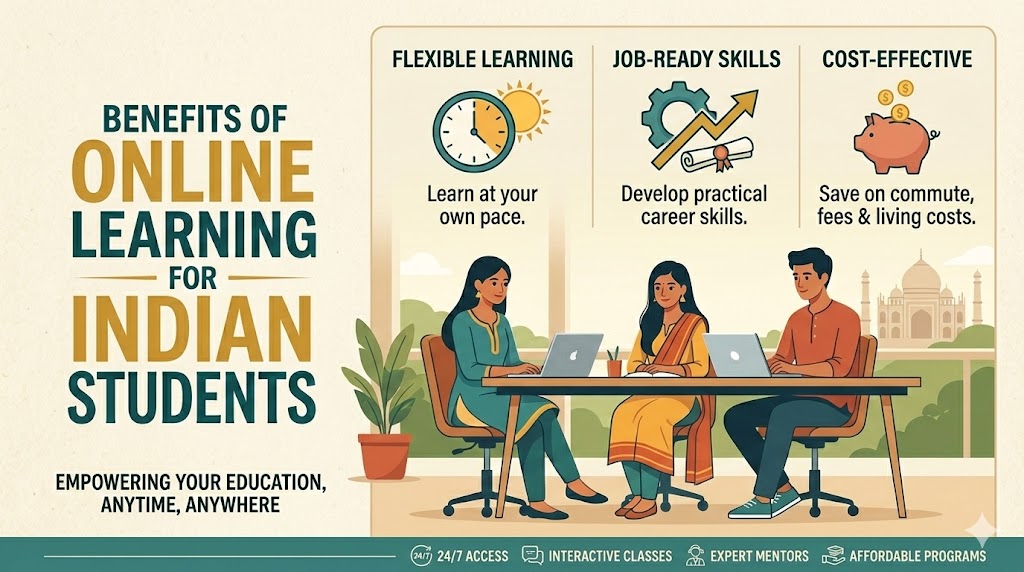
Online learning offers Indian students flexibility, affordability, and access to diverse courses from anywhere in the country. It helps improve digital skills, supports career growth, and makes quality education accessible even in remote areas. With the rise of online education in India, students now have more opportunities than ever before.
Introduction
Over the past few years, online education in India has grown rapidly. From school students to working professionals, millions are choosing online courses and digital learning platforms to upgrade their knowledge. The shift toward e-learning is not just a trend but a long-term transformation in the Indian education system. Let’s explore the major benefits of online learning for Indian students.
1. Flexibility and Convenience
One of the biggest advantages of online learning is flexibility. Students can attend online classes from anywhere, whether they live in metro cities or rural areas. There is no need to relocate or travel long distances.
Online education allows learners to study at their own schedule. This is especially helpful for college students preparing for competitive exams or working professionals managing jobs alongside studies. The freedom to learn anytime makes digital education highly convenient.
2. Affordable and Cost-Effective Education
Cost is a major factor for many Indian families. Traditional education often involves tuition fees, travel expenses, hostel charges, and other costs. In comparison, online courses are usually more affordable.
Many platforms also offer free programs and government-supported initiatives, making quality affordable education in India accessible to students from different economic backgrounds. This cost-effective model is one of the strongest advantages of online education in India.
3. Wide Range of Courses and Specializations
Online learning provides access to a vast range of subjects and specializations. From digital marketing and data analytics to artificial intelligence and finance, students can explore career-oriented courses based on their interests.
Unlike traditional colleges with limited seats and fixed curriculums, online education offers diverse options. Students can enroll in skill development courses, certification programs, or even online degree programs in India, depending on their career goals.
4. Self-Paced and Personalized Learning
Every student has a different learning speed. Self-paced learning allows students to pause, rewatch recorded lectures, and revise topics whenever needed.
This personalized approach improves understanding and retention. Such flexibility enhances the overall learning experience and makes online study more effective compared to rigid classroom schedules.
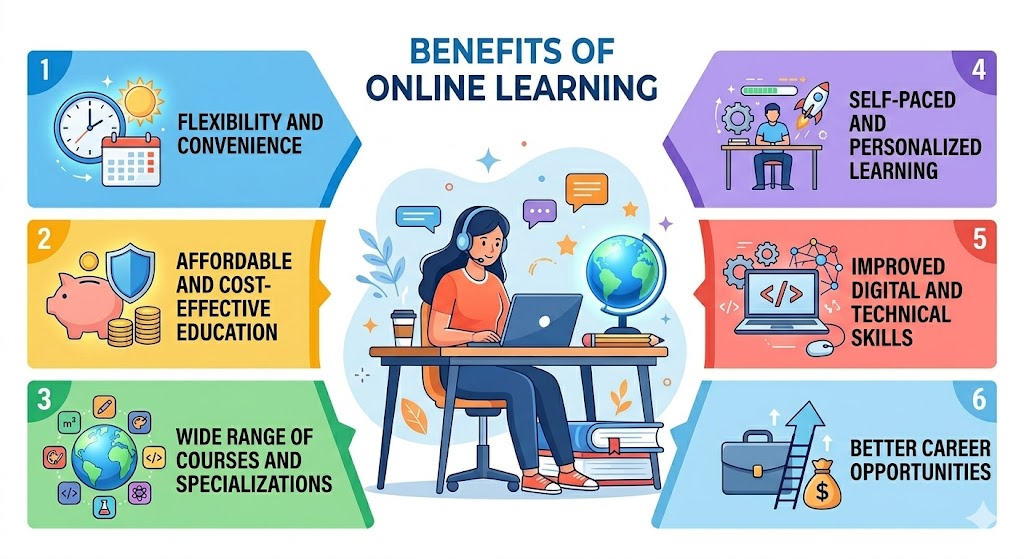
5. Improved Digital and Technical Skills
In today’s digital world, technical skills are essential. Online learning naturally exposes students to digital tools, virtual classrooms, and interactive platforms.
By attending online classes, submitting assignments digitally, and collaborating through online systems, students improve their digital skills and communication abilities. These skills are highly valuable in the modern job market.
6. Better Career Opportunities
One of the key benefits of online education is improved employability. Many online certification courses are designed with industry input, ensuring updated and practical knowledge.
For Indian students and working professionals, skill development through online learning helps in career advancement. Employers increasingly value candidates who continuously upgrade their knowledge through online education programs.
Frequently Asked Questions (FAQs)
1. Is online learning effective for Indian students?
Yes, online learning is effective when students stay disciplined and motivated. It offers flexibility, affordability, and access to quality content.
2. Are online degrees in India valid?
Yes, recognized and approved online degree programs in India are valid for jobs and higher studies.
3. Can rural students benefit from online education in India?
Yes, students in rural areas can access quality digital education without relocating, provided they have internet access.
4. Is online education cheaper than traditional education?
In most cases, yes. Online courses reduce expenses related to travel, accommodation, and campus facilities.
5. Do online certification courses help in getting jobs?
Yes, industry-relevant online courses and certifications improve career opportunities and employability.
Conclusion
The benefits of online learning for Indian students are clear. It offers flexibility, affordability, diverse course options, and better career growth opportunities. As online education in India continues to expand, more students are choosing digital learning as a practical and future-ready option. With discipline and the right approach, online learning can open doors to endless academic and professional success.