
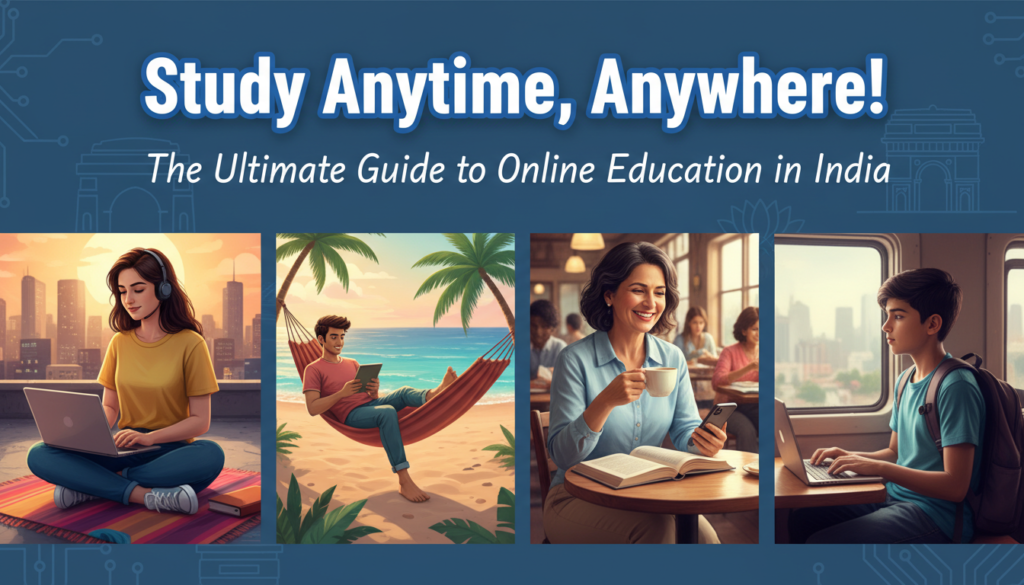
Online education in India has transformed the way students learn, earn degrees, and build careers. From metro cities to small towns, students now have access to quality education without relocating. Whether you are a 12th pass student, a graduate, or a working professional, online education in India offers flexible and affordable learning opportunities.
With increasing internet penetration, smartphone usage, and digital platforms, online learning has become mainstream. Government recognition and university participation have further strengthened its credibility. In this complete guide, you will understand what online education is, how it works, its benefits, eligibility, career scope, and much more.
What Is Online Education in India?
Online education in India refers to degree, diploma, and certificate programs delivered through digital platforms. Students attend live or recorded lectures, submit assignments online, and appear for exams either remotely or at designated centers.
Unlike traditional classroom learning, students do not need to attend physical classes daily. All academic activities are conducted through Learning Management Systems (LMS).
Key Features of Online Learning
- Live and recorded video lectures
- Online study materials (PDFs, eBooks)
- Discussion forums and doubt-solving sessions
- Online assignments and exams
- Digital certificates and degrees
Online programs are now offered by UGC-approved universities, ensuring academic credibility.
Online Education vs Distance Education: What’s the Difference?
Many students confuse online learning with distance education, but they are not the same.
 Online Education
- Fully digital mode
- Live + recorded classes
- LMS-based learning
- Regular interaction with faculty
- Online exams (in many cases)
 Distance Education
- Mostly self-study based
- Printed study materials
- Limited interaction
- Fewer live sessions
- Exams usually at physical centers
 Regular Education
- Physical classroom attendance
- Fixed schedule
- Campus-based activities
- Face-to-face interaction
Comparison Table: Online Learning vs Distance Education vs Regular Education
|
Feature |
Online Learning |
Distance Education |
Regular Education |
|
Mode of Study |
Fully Digital |
Self-study + limited digital |
Classroom-based |
|
Flexibility |
High |
Moderate |
Low |
|
Live Classes |
Yes |
Rare |
Yes |
|
Study Material |
Online LMS |
Printed Books |
Physical + Digital |
|
Interaction |
Online discussions |
Minimal |
Face-to-face |
|
Suitable For |
Working professionals, remote learners |
Self-disciplined learners |
Full-time students |
How Online Education Works in India
Understanding how online education works in India is important before enrolling.
Admission Process
- Visit the university website
- Check eligibility criteria
- Fill out online application form
- Upload documents (10th, 12th, graduation mark sheets)
- Pay application fees
- Confirmation via email
Most universities offer direct admission without entrance exams for many online programs.
Learning Management System (LMS)
After admission, students receive LMS login credentials. The LMS includes:
- Video lectures
- Recorded sessions
- eBooks and study material
- Assignment submission portal
- Exam schedules
This system ensures structured and organized learning.
Live & Recorded Classes
Students can:
- Attend live interactive sessions
- Watch recorded lectures anytime
- Participate in Q&A sessions
- Join peer discussions
This makes online learning flexible and student-friendly.
 Assignments & Exams
- Online assignments submitted via LMS
- Internal assessments
- Semester-end exams (online or center-based)
- Proctored exams in some cases
 Certification & Degree
After successful completion, students receive:
- UGC-recognized degree
- Digital certificate
- Mark sheets
The degree is valid for jobs, government exams, and higher education (if approved by regulatory bodies).
UGC Approval and Government Recognition
In India, online degree programs must be approved by the University Grants Commission (UGC). The UGC ensures that universities follow proper academic standards.
Students should always:
- Check if the university is UGC-approved
- Verify if the program is recognized
- Confirm eligibility for government jobs
UGC-approved online degrees are considered equivalent to regular degrees (as per current regulations).
Popular Universities Offering Online Programs
Several reputed universities in India offer online education programs.
 Indira Gandhi National Open University (IGNOU)
- Government university
- Affordable fee structure
- Wide range of UG & PG courses
- Strong reputation in distance education
Amity University (Online)
- Private university
- Modern LMS platform
- Industry-oriented programs
- MBA, BBA, MCA, BA, B.Com courses
Benefits of Online Education in India
Online education offers multiple advantages:
 1. Flexibility
Study anytime, anywhere.
2. Affordable Fees
Lower costs compared to regular college programs.
3. Learn While Working
Ideal for working professionals.
4. Skill-Based Courses
Many programs focus on industry skills.
5. Accessibility
Students from rural areas can access quality education.
Challenges of Online Learning
While online education is beneficial, it has some challenges:
- Requires self-discipline
- Limited campus exposure
- Internet dependency
- Less face-to-face networking
Students must manage time effectively to succeed.
Eligibility Criteria for Online Courses
Eligibility depends on the program:
Undergraduate (UG) Courses
- 10+2 from recognized board
Postgraduate (PG) Courses
- Bachelor’s degree from recognized university
Diploma/Certificate Courses
- 10th / 12th pass (varies by course)
Some programs may require minimum percentage criteria.
Career Opportunities After Online Courses
Online degrees open multiple career paths:
 After Online BBA
- Marketing Executive
- Sales Manager
- HR Executive
After Online MBA
- Business Analyst
- Project Manager
- Operations Manager
After Online BCA/MCA
- Software Developer
- Web Developer
- IT Support Executive
Online graduates can apply for:
- Private sector jobs
- Government exams (if eligible)
- Higher education (MBA, M.Tech, etc.)
Who Should Choose Online Education?
Online education in India is ideal for:
- Working professionals
- Housewives restarting careers
- Students in remote areas
- Entrepreneurs
- Government job aspirants
If you need flexibility and affordability, online learning is a strong option.
Frequently Asked Questions (FAQs)
Is online education in India valid?
Yes, if the university is approved by the University Grants Commission (UGC), the degree is valid.
Is online learning better than distance education?
Online learning offers more interaction and live classes compared to traditional distance education.
Can I get a government job with an online degree?
Yes, if the degree is UGC-recognized and meets eligibility criteria.
Are online exams monitored?
Many universities conduct proctored online exams or center-based exams.
Is online education suitable for working professionals?
Yes, it is designed especially for working individuals who cannot attend regular college.
Should You Choose Online Education in India?
Online education in India is growing rapidly and becoming a trusted alternative to regular college programs. With UGC approval, modern LMS platforms, and flexible learning options, students now have more choices than ever before.
However, always verify university recognition, course structure, and career outcomes before enrolling.
If you are looking for flexibility, affordability, and career growth, online education in India can be the right path for you.
 Take time to research, compare universities, and choose a program that matches your career goals. Your future starts with the right decision today.